
























Manipal University Jaipur Hosts International Conference on Sports Sciences, Focuses on India's Olympic Vision 2036
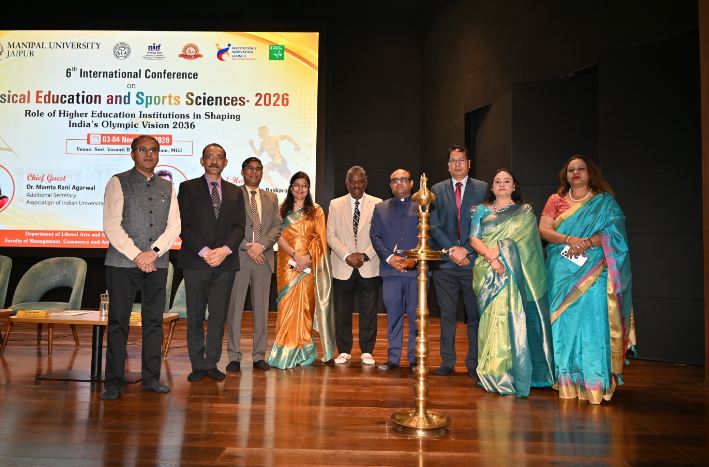
The Department of Liberal Arts and Social Sciences, Manipal University Jaipur (MUJ), organised the sixth edition of the International Conference on Physical Education and Sports Sciences (ICPESS 2026), bringing together eminent academicians, renowned sportspersons, sports experts and researchers to deliberate on the role of higher education institutions in shaping India's aspirations of hosting the 2036 Olympic Games and building a globally competitive sporting ecosystem.
|
|
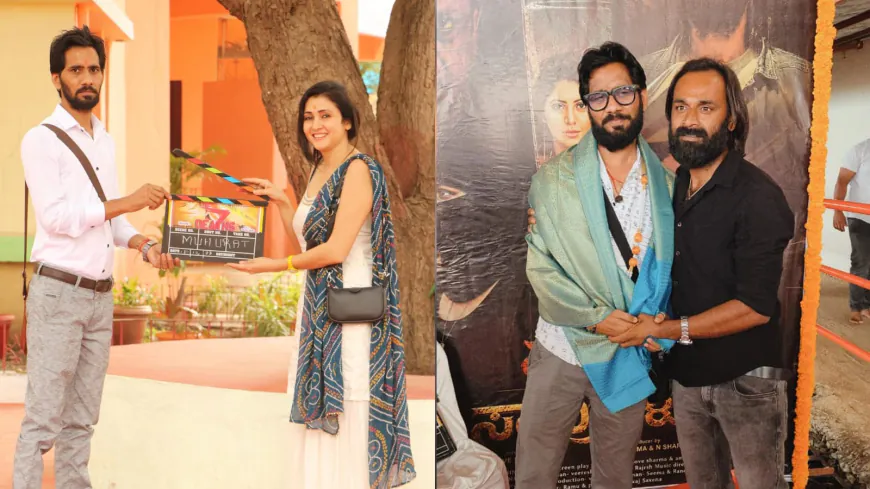
Dignitaries at the Inaugural Ceremony of ICPESS- 2026 organised by Manipal University Jaipur
The conference, themed 'Role of Higher Education Institutions in Shaping India's Olympic Vision 2036', provided an international platform for discussions on sports education, scientific training, talent identification, research, infrastructure development and institutional collaboration to strengthen India's preparations for the Olympics.
The inaugural ceremony commenced with the traditional lighting of the lamp, followed by a welcome address by Prof. (Dr.) Brajesh Kumar, Dean, Faculty of Management, Commerce and Arts, MUJ. Highlighting India's potential to host the 2036 Olympics, he emphasised the growing importance of sports in higher education and appreciated the achievements of students from the Department of Liberal Arts and Social Sciences in various national and international competitions. He also welcomed the distinguished speakers and delegates, acknowledging their contributions to the conference.
Cdr. (Dr.) Anil Rana, Pro-President, MUJ, felicitated the Chief Guest, Dr. Mamta Rani Agarwal, Additional Secretary, Association of Indian Universities, and Guest of Honour, Padma Shri and Arjuna Awardee Vasudevan Baskaran, in the presence of Prof. (Dr.) Brajesh Kumar, Prof. (Dr.) Trishu Sharma, Associate Dean, School of Arts; Prof. (Dr.) Richa Arora, Head, Department of Liberal Arts and Social Sciences and Conference Chair; and Dr. Rina Poonia, Associate Professor and Conference Convener.
Addressing the gathering, Cdr. (Dr.) Anil Rana highlighted Manipal University Jaipur's initiatives in promoting sports and developing sporting infrastructure. Emphasising the role of sports in shaping an individual's personality, he remarked that "sports builds character and resilience." He underlined that educational institutions must go beyond academic excellence and create opportunities for students to develop discipline, leadership, teamwork and perseverance through sports.
Guest of Honour Padma Shri and Arjuna Awardee Vasudevan Baskaran, who led the Indian men's hockey team to its historic gold medal at the 1980 Moscow Olympics, stressed that India's Olympic vision must not remain confined to hosting the Games but should also focus on achieving excellence in medal-winning performances. Recalling his journey as a university athlete in the 1970s, he observed that opportunities rarely come knocking and athletes must be prepared to seize them.
Calling for a paradigm shift in India's sporting approach, Baskaran advocated moving beyond conventional performance-oriented coaching towards a scientifically informed and professionally managed sporting ecosystem. He urged academicians and higher education institutions to take greater responsibility for identifying sporting talent, nurturing athletes and advancing sports research. He also highlighted MUJ's potential to develop a holistic sporting environment and provide training facilities for the Indian contingent ahead of upcoming international competitions.
Chief Guest Dr. Mamta Rani Agarwal, Additional Secretary, Association of Indian Universities, emphasised the need for an inclusive and integrated sporting ecosystem involving athletes, coaches, dieticians, sports scientists and administrators. She stated that the foundation for India's Olympic vision 2036 must be laid at the school and higher education levels through interdisciplinary collaboration and sustained institutional efforts.
Suggesting innovative ways to integrate sports with other academic disciplines, she cited the possibility of engaging computer science students in sports analytics during cricket tournaments and involving pharmacy students in developing appropriate dietary prescriptions for athletes. She stressed that sports development requires a fundamental shift in cultural attitudes and institutional mindsets.
Dr. Agarwal further observed that India's challenge is not merely to build stadiums or attract investments but to transform its sporting culture and institutional approach through sustainable initiatives and individual and institutional accountability. She called upon universities to translate the academic deliberations and recommendations emerging from international conferences into concrete and actionable outcomes.
In her conference address, Dr. Rina Poonia reflected on the conceptualisation and evolution of ICPESS, which has now reached its sixth edition. Highlighting the extensive academic participation, she informed that the conference received participation from 200 online paper presenters across 16 sessions and 28 offline presenters across five sessions, reflecting its growing academic outreach and relevance.
The inaugural session concluded with a vote of thanks by Dr. Vijmendra Kumar Grover, who expressed gratitude to the university leadership, distinguished guests, invited speakers, delegates, participating scholars and attendees for their presence and valuable contributions.
With extensive academic participation and insights from distinguished sports personalities and experts, ICPESS 2026 reaffirmed the crucial role of higher education institutions in developing sporting talent, promoting sports science and creating a robust ecosystem to realise India's Olympic aspirations for 2036.
To know more about Manipal University Jaipur please visit – jaipur.manipal.edu